The Pink Floyd Discography in Ascending Order of Chronological
The Piper at the Gates of Dawn Released: 4 August 1967
A Saucerful of Secrets Released: 28 June 1968
Atom Heart Mother Released: 2 October 1970
Meddle Released: 5 November 1971
Obscured by Clouds Released: 2 June 1972
The Dark Side of the Moon Released: 1 March 1973
Wish You Were Here Released: 12 September 1975
Animals Released: 21 January 1977
The Wall Released: 30 November 1979
The Final Cut Released: 21 March 1983
A Momentary Lapse of Reason Released: 7 September 1987
The Division Bell Released: 28 March 1994
I had a grand idea to listen to the discography of Pink Floyd’s studio albums and write an op/ed on each album as I played them. I have since come to my senses, and what follows is a truncated version of that initial enthusiasm.
The Piper at the Gates of Dawn Released: 4 August 1967

This is a wonderfully cohesive album that belies the band’s youth and the short time they’ve been together. The album features all members of the band, without any of them taking the lead at any time, unlike other bands that frequently do so through instrumental breaks or showcases of an artist’s mastery of a specific instrument. Two of its songs, “Astronomy Dominé” and “Interstellar Overdrive“, became long-term mainstays of the band’s live setlist, while other songs were performed live only a handful of times. I enjoyed revisiting this album; it is a stellar start to their discography.
A Saucerful of Secrets Released: 28 June 1968

A Saucerful of Secrets is the second studio album by Pink Floyd, released on 28 June 1968 by EMI Columbia in the UK and the US by Tower Records. The mental health of the singer and guitarist Syd Barrett deteriorated during recording, so David Gilmour was recruited; Barrett left the band before the album’s completion.
Barrett had been the primary songwriter on Pink Floyd’s debut album, The Piper at the Gates of Dawn (1967). On A Saucerful of Secrets, each member contributed songwriting and lead vocals. Gilmour appeared on all but two songs, while Barrett contributed to three. “Set the Controls for the Heart of the Sun” is the only song on which all five members appear.
Atom Heart Mother Released: 2 October 1970

Epic. That is what I call this album. Epic. It is composed of pieces of music put together to create a memorable listening experience. Side one is an epic romp through half a dozen musical pieces that come together to form The Atom Heart Mother Suite. The original score was labelled as “Untitled Epic,” while elsewhere he track was initially called “The Amazing Pudding”; I’m glad they went with “Atom Heart Mother.” Its name was changed after the band were due to play an “in concert” broadcast for BBC Radio 1 on 16 July 1970, and had needed a title for John Peel to announce it. Geesin pointed to a copy of the Evening Standard and suggested to Waters that he would find a title in the. The headline of one article, on page 9, was: “Atom Heart Mother Named”, a story about a woman being fitted with a Plutonium-238-powered pacemaker. Hipgnosis designed the cover, which was the band’s first not to feature their name or include photographs of them anywhere on it. This trend would continue on subsequent covers throughout the 1970s. The cover shows a Holstein cow in a meadow.
Meddle November 1971
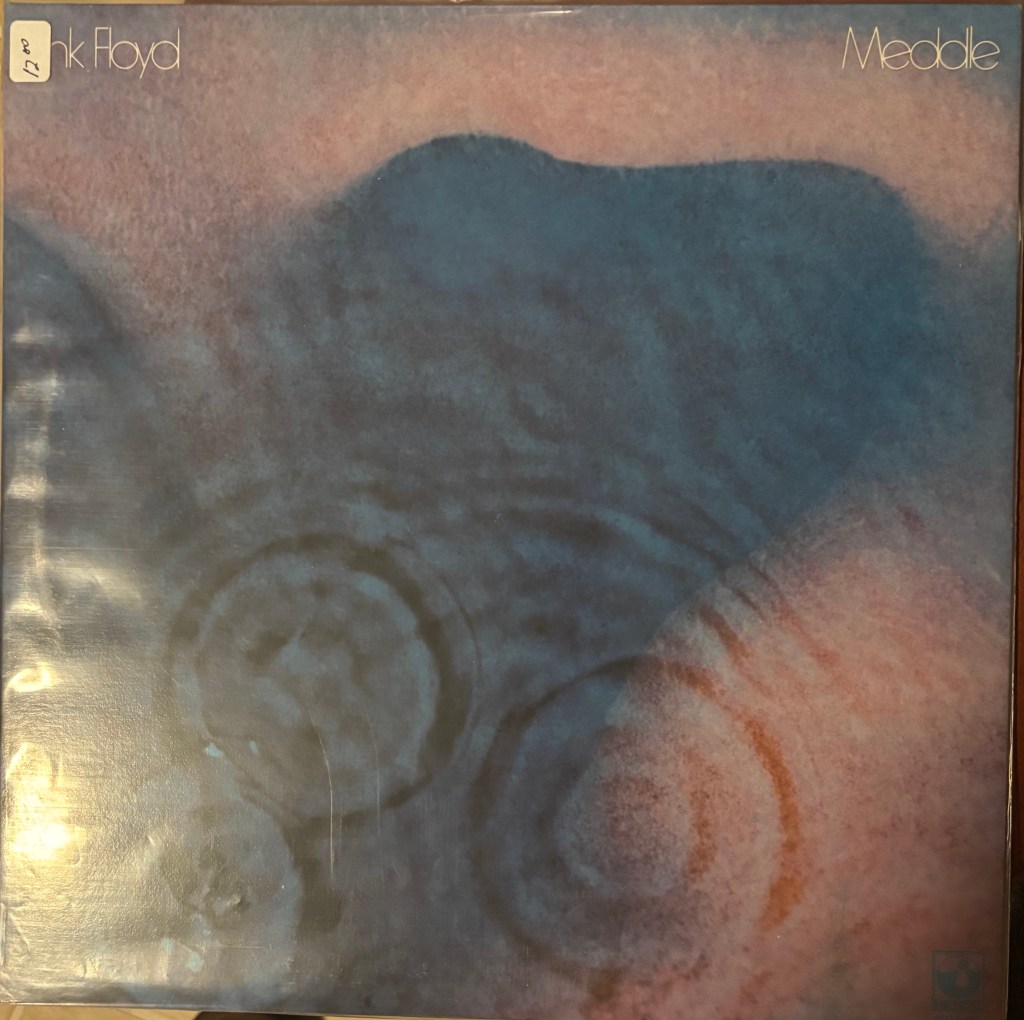
When I listen to Meddle, I hear proto-DSotM. The seeds have been planted and are starting to bear fruit. The lads could have made a double album with material from Meddle melding into the Dark Side. Echoes in particular, echoes of what is yet to come.
Obscured by Clouds Released: 2 June 1972
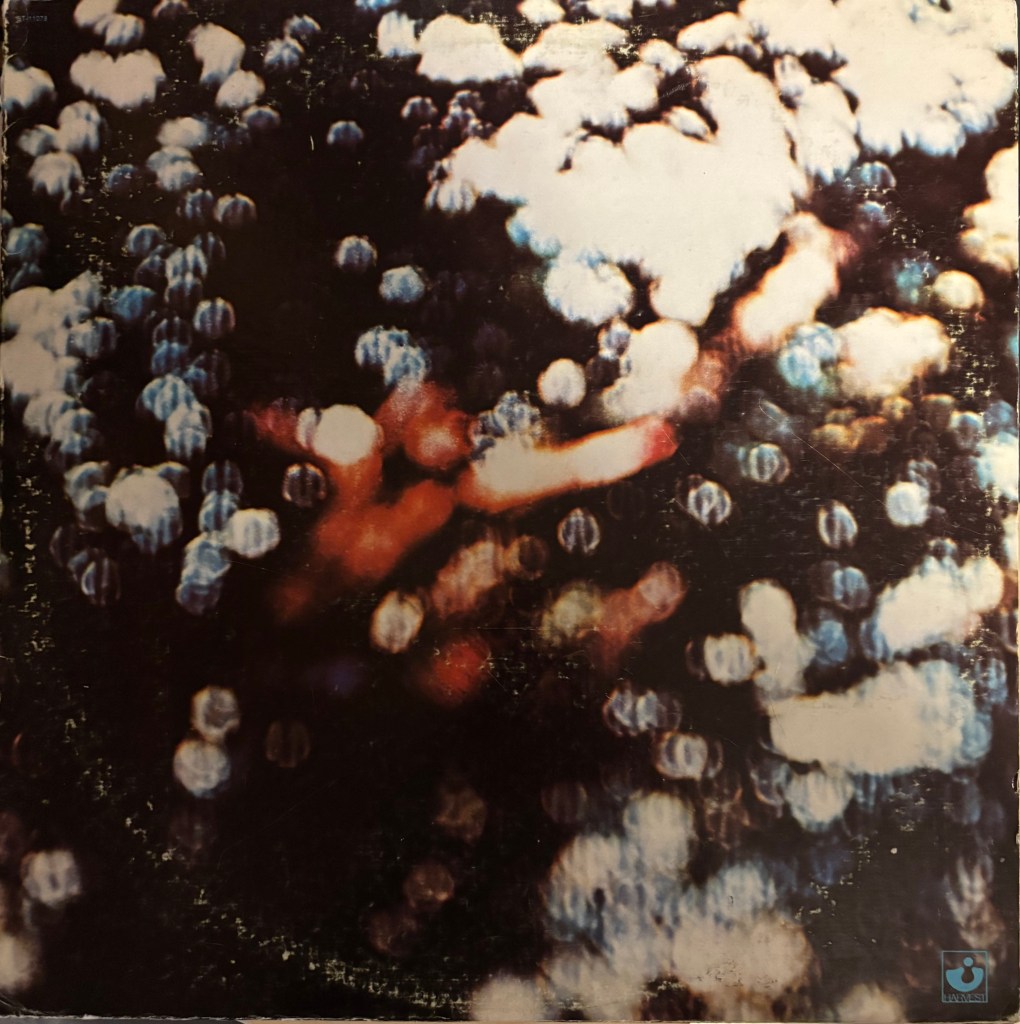
OK, just the short and sweet on this album. Obscured by Clouds was recorded as the soundtrack to the French movie La Vallée and was recorded in two sessions while the band was touring and developing Dark Side of the Moon. While it isn’t a great album, it is still a stepping stone for the band, representing the direction they had been heading up to this point and the direction they were going to take in the future, after the release of Dark Side of the Moon.
While this is not the peak of their musical career, it is still a rather good listen. I am playing it as I write this, and I find my head bobbing and my feet tapping along with the music. It is also important in the grand scheme of things, as the band begins work on their next album, which they seem quite focused on, even eager to start recording. Obscured by Clouds gives us glimpses into the future. On the last album, Meddle, we had Echoes of what was to come. In Obscured by Clouds, we get multiple examples of where the band was heading musically. I won’t do a boring song-by-song breakdown. I would suggest sitting down and listening for the clues.
Considering the relatively small amount of effort they invested in this album compared to other soundtracks, Obscured by Clouds remains a good album. It’s not cringeworthy; I enjoyed listening to it.
The Dark Side of the Moon Released: 1 March 1973

I am at a loss for words to comment on the subject of this album. I bought my first copy in July or August of 1973. I now own 9 copies and have my eyes on the tenth, the 50th anniversary reissue. The Dark Side of the Moon is consistently a “Lost in the Woods” album. I played this three times from start to finish while prepping for this sentence, and I still love the album. Arguably the best Pink Floyd album and consistently at or near the top of almost any best-of list I create.Wish You Were Here Released: 12 September 1975

Another stellar album that carries forward the progressive and long-player pattern the band has settled into. Not quite on the same orbit as Dark Side of the Moon, but tremendously well done just the same. Easily another ‘Lost In The Woods’ album.
Animals Released: 21 January 1977
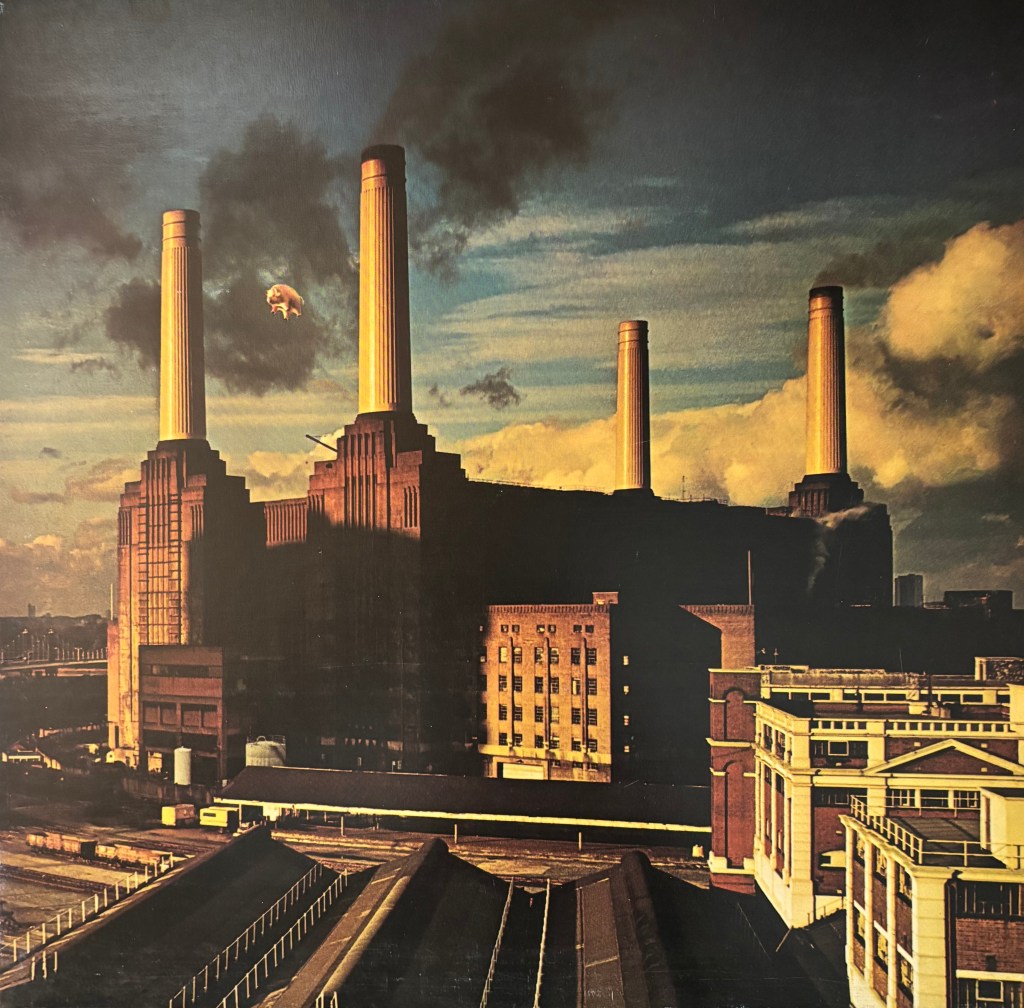
Animals is another Pink Floyd album that I listened to twice in a row while I wrote this short narrative. Animals is at times raw and uncut. These are animals in the wild, where life is hard and you are someone else’s meal if you don’t tread carefully. The album, Animals, carries forward the band’s penchant for extended cuts and story songs. Animals is based loosely on George Orwell’s book “Animal Farm.” Animals is a pivot point for the band as Roger Waters is the leading composer. The cover is Battersea Power Station, which is hard to miss. I saw it from the train we were taking to Salisbury to see the cathedral, which is another grand building. Good memories and a good album to listen to on a chilly, rainy day.
The Wall Released: 30 November 1979

I had listened to The Wall a month or so back, so this is a repeat of sorts. On the previous listen, I was of the opinion that the band was falling apart, and the lack of good material on The Wall confirmed that. Listening to it today gave me a favourable taste that restored The Wall to the upper echelons of my albums, and Pink Floyd’s discography in particular. Whilst it was restored to a favourable location, it did not jump forward in the list of albums. It is better than A Momentary Lapse of Reason, The Division Bell, and Endless River, but not as good as Animals.
The Wall is the end of the power section of Pink Floyd’s studio albums. The albums that follow are a hodgepodge of cuttings that do not represent the band well, and often do not even include the whole band.
The Final Cut Released: 21 March 1983
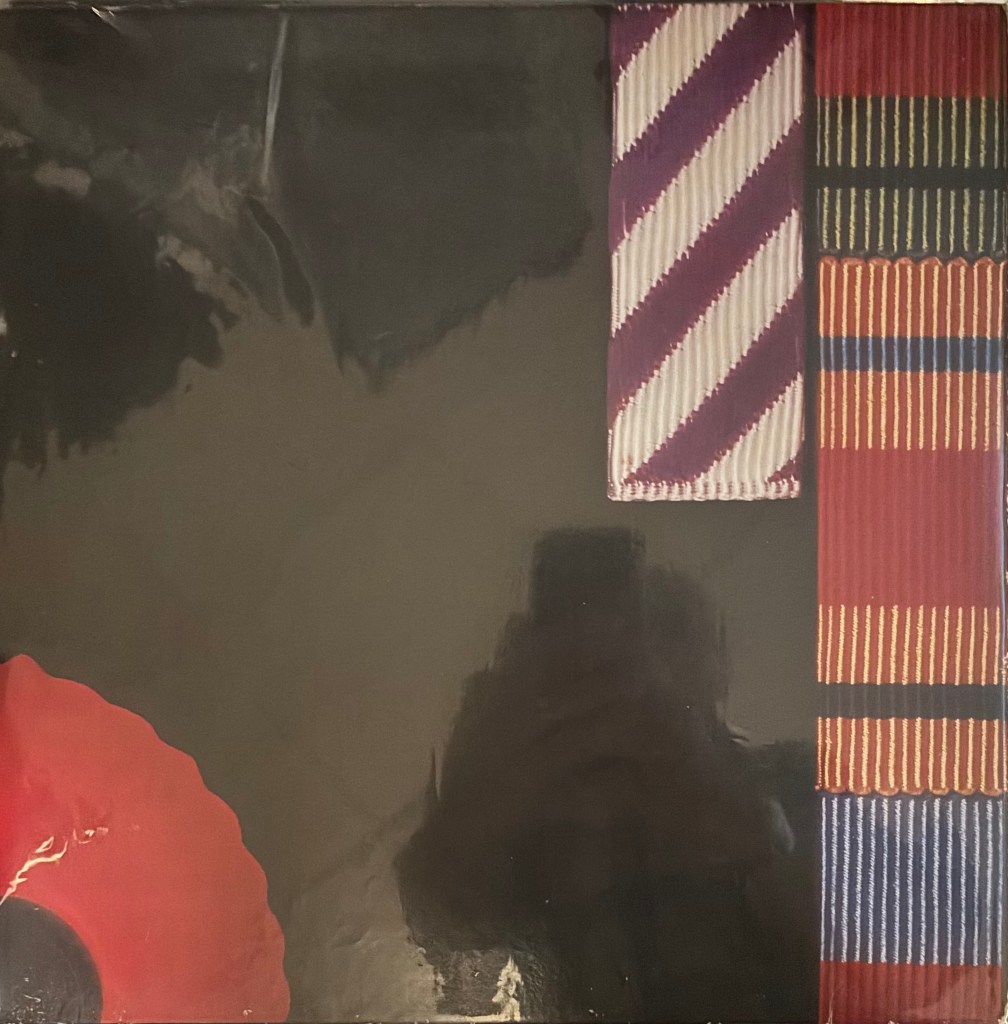
They should have left this on the cutting room floor or put it in The Wall, since a large part of The Final Cut was made up of cuttings from the recording of The Wall. The Final Cut did, however, redeem itself somewhat by evoking a fond memory of another song, “Face On The Cutting Room Floor” by The Nitty Gritty Dirt Band. The Final Cut comprises unused material from the band’s previous studio album, The Wall, as well as some new material.
The Final Cut is the last Pink Floyd album to feature founding member Roger Waters, who went on to leave the band in 1985. It is the only Pink Floyd album without founding member and keyboardist Richard Wright, who had left the band under pressure from Waters after the Wall sessions. The recording was plagued by conflict; guitarist David Gilmour felt many of the tracks were not worthy of inclusion, but Waters accused him of failing to contribute material himself. The contributions from drummer Nick Mason were limited mostly to sound effects.
I gave The Final Cut a good listen and then filed it away on the cutting room floor. I did not listen to the final two albums, A Momentary Lapse of Reason and The Division Bell, because I do not own them on vinyl. In conclusion, I thoroughly enjoyed listening to the Pink Floyd albums in my vinyl collection. In the past, I have felt overwhelmed by the material of some bands when listening to their discography in one sitting, but I did not encounter that with Pink Floyd, although the last couple of albums were a bit of a struggle.
I group Pink Floyd’s albums thusly.
The Formative Years.
The Piper at the Gates of Dawn
A Saucerful of Secrets
Atom Heart Mother
Meddle
Obscured by Clouds
The Power Years
The Dark Side of the Moon
Wish You Were Here
Animals
The Wall
The End Years
The Final Cut
A Momentary Lapse of Reason
Division Bell
Endless River
I also listened to these fine albums.
John Mellencamp The Best That I Could Do 1970-1988
John Mellencamp recorded a very admirable amount of material over these 18 years, and that makes this a really good album to listen to.
London Beat In The Blood
I had never heard of this band until yesterday. This was part of a group of 10 CDs that I acquired for $ 10. I can see myself playing this again since it is quite good.
Patrick Watson Close To Paradise
I have listened to Patrick Watson’s material for quite some time now and have had the opportunity to see him live. Close To Paradise is a good album, a bit unfocused at times, but a good listen just the same.
CSNY CSNY 1974
Crosby, Stills, Nash & Young, what can I say? One of, if not the second-best, super band, I rate The Lost Dogs at number one, but that’s just my opinion.
CocoRosie Heartache City
Same 10 for 10 handful and another artist I had never heard of before. This is electronica/found music; if you enjoy this genre, you will likely appreciate this album. As unusual as it may be, there are some good bits scattered throughout the CD.
Whew, that was a marathon of listening, and at the end of that session, I decided to reorganize my cassette collection; it is a work in progress.
 Weathered Music