
| Paul Simon | Paul Simon |
| Paul Simon | Still Crazy After All These Years |
| Paul Simon | One Trick Pony |
| The Who | Who’s Next |
| Black Grape | Pop Voodoo |
| Paul Simon | Greatest Hits, Etc. |
| Paul Simon | Graceland |
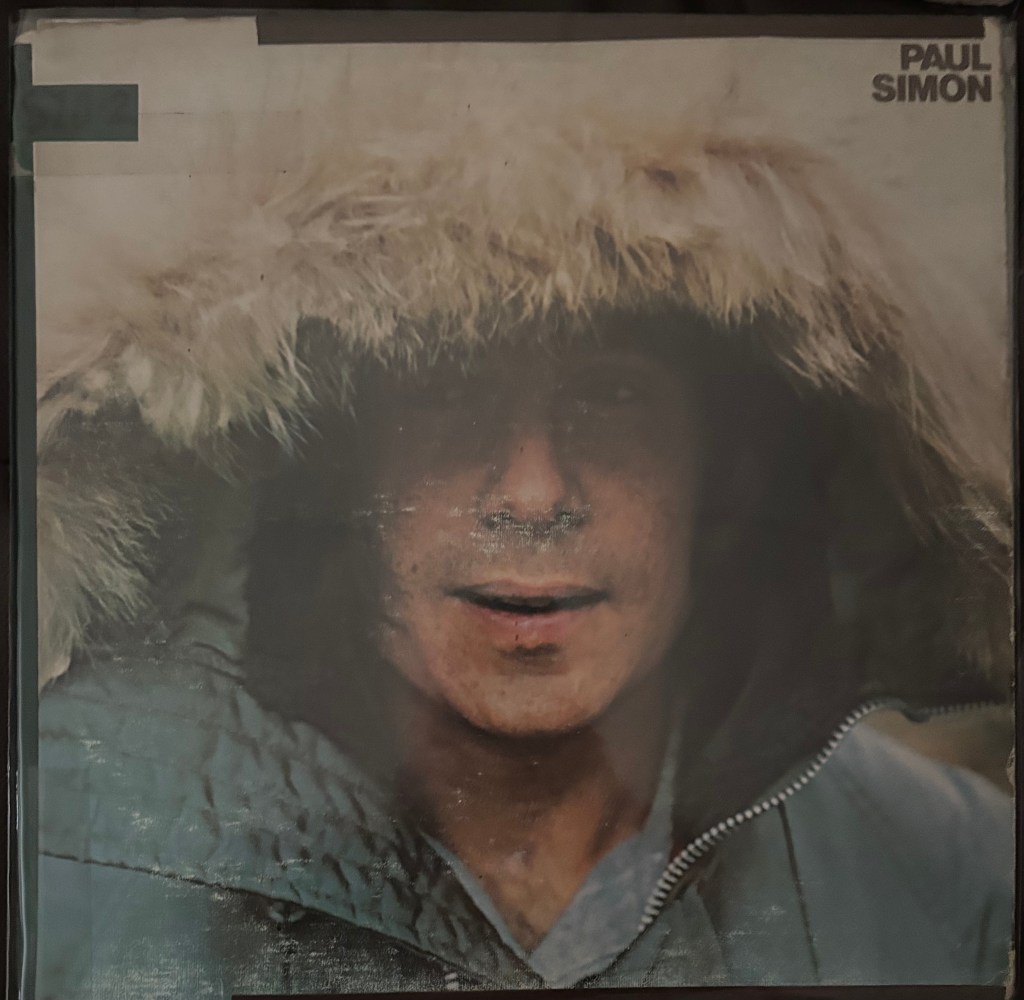
Having enjoyed the Simon & Garfunkel catalogue, I was looking forward to listening to Paul Simon’s solo career. I do not have his first album, but I do have his self-titled sophomore release. It had a few moments, but nothing to write home about. Paul Simon’s third album, There Goes Rhymin’ Simon, is another gap in my collection. It’s a shame because it has the song “Kodachrome” on it, which is a favourite of mine for sentimental reasons.
Next up is Still Crazy After All These Years, which, apart from a catchy title, offered me only a half portion. I liked the first side with a few great tracks. I am fond of “My Little Town“, probably a throwback to my youth in little towns. The other track I like is “50 Ways To Leave Your Lover.” I cannot testify to the effectiveness of any of the ways Simon lists in the song. A fun and catchy little tune that is a period mark on the album for me. After this song, nothing on the remainder of the album moved me; overproduced, sugary pop throwaways were all that remained.

One Trick Pony is an album released in tandem with a movie of the same name. Despite their similarities, the album and film are musically distinct: each features different versions of the same songs, as well as certain songs that appear exclusively on either the film or the album. I have not watched the movie. I have listened to the album and I find it wanting. Wanting better songwriting, among other things. The band Paul Simon used on the album and the movie is top shelf, but they couldn’t even drag the album out of the bin of dismal outcomes. This is two duds in a row for me. I hope the tide turns before I turn my back on Paul Simon’s solo career.

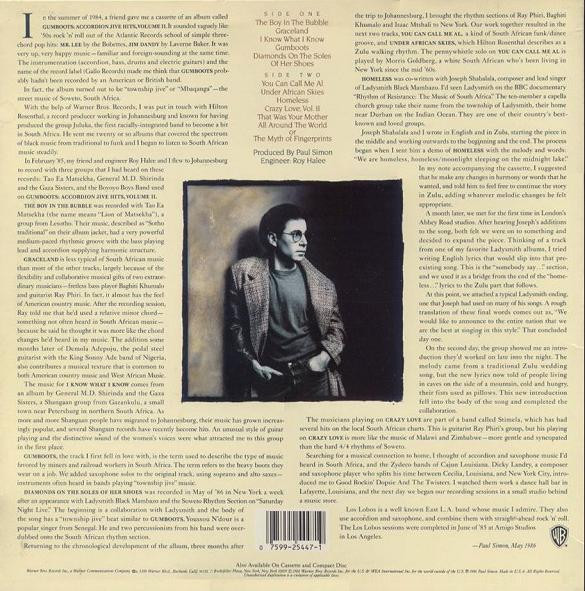
I don’t have Simon’s next album, Hearts and Bones, and a quick perusal of the songs didn’t stir any long-dormant memories of the record. Three years later, Paul released what I consider the crowning glory of his solo career, with a tip of the crown to his career as a whole. The album that I heap such rich accolades upon is Graceland. I can remember when this came out and the debate over whether Paul Simon had collaborated with the African community or stolen their music.

Wikipedia:
Organizations such as Artists United Against Apartheid criticized Simon for breaking the cultural boycott on South Africa imposed for its policy of apartheid, while others accused him of appropriating the music of another culture. Simon responded that Graceland was a political statement that showcased collaboration between black and white people and raised international awareness of apartheid. Some praised him for helping popularize African music in the West.
Graceland became Simon’s most successful album and his highest-charting album in over a decade, with estimated sales of more than 16 million copies worldwide. It won the 1987 Grammy for Album of the Year and is frequently cited as one of the best albums in history. In 2006, it was added to the US National Recording Registry as “culturally, historically, or aesthetically important”.
Paul Simon reached his zenith on Graceland and never came close to that level of sales or creativity again. After listening to the Paul Simon records in my collection, I concluded that my two favourite Paul Simon records are Graceland and Greatest Hits, Etc. I listened to Paul Simon (ST), Still Crazy After All These Years, and One Trick Pony in order, and gave some thought to them as I listened. Those thoughts are in the first three paragraphs above.
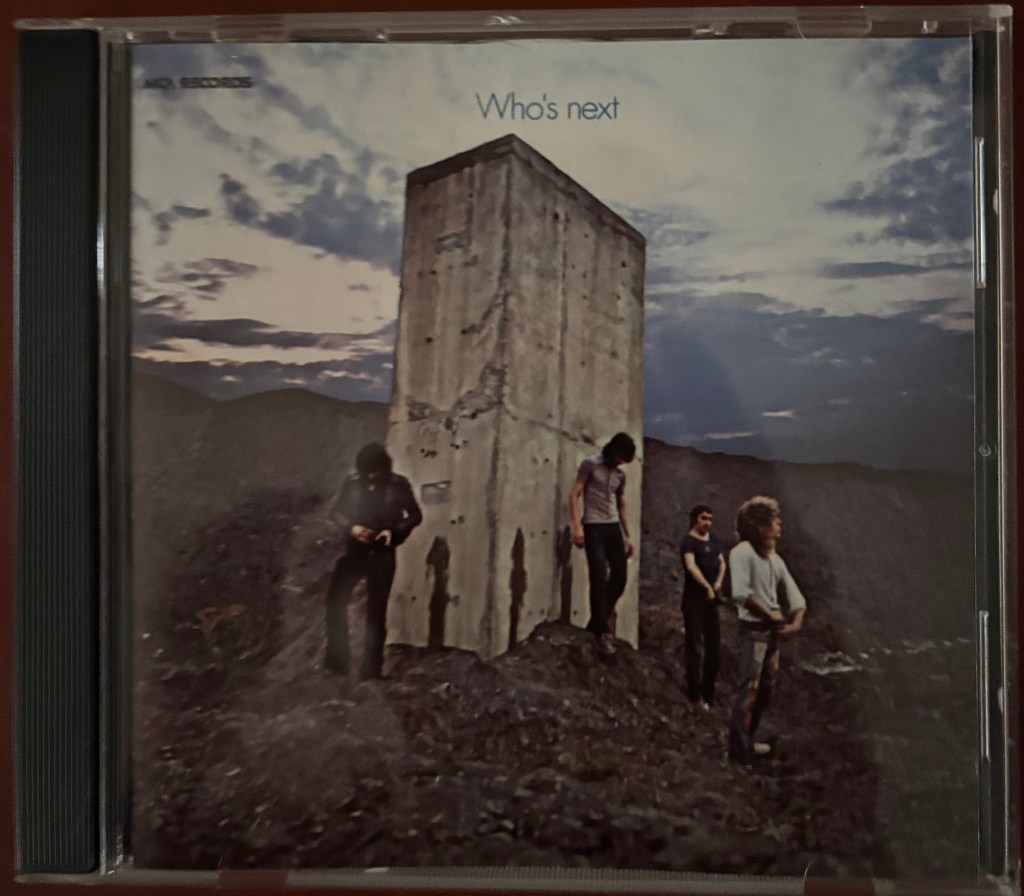
I then drove around town on some errands and popped Black Grape and The Who into the car. I listened to both of them twice while I cruised about, and they were both good. Who’s Next is a throwback to days long gone, and while I still enjoyed it, it didn’t have the magic that it possessed in 1971. While I ruminated and listened, I realized that this could have been a best-of album; it is loaded with great songs. Starting with Baba O’Riley which is often lauded as one of the best rock songs of all time. I wouldn’t go that far, but it is a damn good song. The remaining songs are top-ten hits on their own, and, taken as a whole, the album becomes an entity rather than a collection of good songs. That makes sense because the songs Pete Townsend wrote —except for My Wife, which was written by John Entwistle —were intended to be part of a concept album called Lifehouse. That project never made it beyond the eight songs on Who’s Next, which gives it the cohesiveness of a proper concept album. Apart from the music, the album cover is humorous.

Black Grape is an interesting group. They released only four albums, Pop Voodoo being the third. They combine elements of funk and electronica that become something unique: Black Grape. I have popped their other CDs into the car and prepped for my next drive so I can hear their catalogue as a whole. Pop Voodoo can stand on its own, as can all of their releases, but I like to hear how a band morphs over the years. The band uses their music as a platform to expound their political and, to a lesser extent, religious ideologies. While reviews were generally middle-of-the-road, with an aggregate score of 3.5, I would give it a solid 4.
Saturday night was special. Bruce Romaniuk, the owner of Record Collectors Paradise, threw a party to celebrate the store’s 10th year in business. It was good to mingle with some staff I hadn’t seen for quite a while and to see the new warehouse. One of the staff members, Andrew, put together a very well done history of the store. They must be the largest record store in Canada. I’ve seen quite a few stores over the years, and nothing comes close to RCP.
 Weathered Music