Unknown's avatar

About normanweatheredmusic

I listen to music.

Me, 1969-1973

Best of bee gees.jpg

1969 I bought my first LP, Best of Bee Gees, easily identified by its bright yellow cover. I have to resist the urge to write it as Best of the Bee Gees; there is no ‘the’ in there. I played that album over, and over, and over. I knew every word to every song. I can clearly remember laying on the floor with my head in the middle of the two speakers on my parent’s record player. I don’t recall them ever complaining about listening to it so often, mind you Dad was away from home most of the time, Mom kept herself busy, and I didn’t turn the volume up to 11.

That was the only album that I bought that year, but I did purchase other albums from 1969 later on. Some of those albums that are still on my turntable include The Guess Who with Wheatfield Soul. Bob Dylan’s Nashville Skyline and Crosby, Stills and Nash, the story of that is below. The Rolling Stones compilation Through The Past, Darkly (Big Hits Vol. 2), Isaac Hayes phenomenal album Hot Buttered Soul, Abbey Road from the Beatles, and closing it with some more Guess Who, the crop is Canned Wheat this time. Some call 1969 the penultimate year of rock and roll. It closed the door on the 1960s with the Beatles dissolving as a band, the hippy era drawing to a shadow of its former self ( it never really went away), and rock and roll reinventing itself going into the 1970s. I may have only purchased one LP that year, but it was still an excellent year.

Crosby, Stills, Nash & Young - Deja Vu.jpg

In 1970 I was travelling more, bin flipping in more record stores and with a bit more coin I was able to take home more music. I also was good at sticky finger shopping. A memorable addition to my music library from that year was a copy of Déjà Vu by Crosby, Stills, Nash & Young. I was introduced to this band by the clerk in a record store in Montreal. During layovers between flights, I would take a taxi to a nearby shopping mall that had a nice little record store, and the guy always had something good on the turntable that I would invariably take home. In 1969 he had Crosby, Stills & Nash on the turntable but I was short on cash so I just filed that away and in 1970 he had Déjà Vu up and playing, so that came home with me, Stills, Nash & Young would arrive later. Another special purchase that year was In the Court of the Crimson King by none other than King Crimson, although I heard it first in that same record store in 1969, like CSY, I had to wait a year to bring it home.
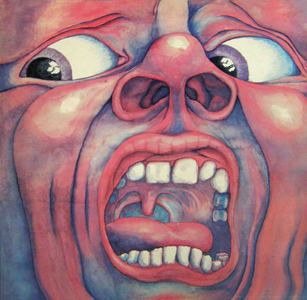
In the Court of the Crimson King - 40th Anniversary Box Set - Front cover.jpeg

The list of albums released in 1970 is long, the list that I bought in 1970 is short, the two albums already mentioned and Woodstock: Music from the Original Soundtrack and More. I have a confession; I agreed to trade Woodstock to my friend Greg in exchange for the purple nazi helmet he had. I got the helmet, but he never got the album, and I have not seen him since then to make it right. If you ever read this, Greg, contact me, and I will ship the album to you. I do not have the helmet or the album as I write this. I also stole Suitable for Framing by Three Dog Night from the youth centre in Churchill Falls, Labrador. I don’t know who owned it, which makes restitution difficult. Some noteworthy albums from 1970 that I didn’t swipe and I am still spinning include Moondance by Van Morrison and The Who Live at LeedsAtom Heart Mother by Pink Floyd is notable for its excellent cover art and a long-standing relationship between The Pink Floyd and me.

The lower half of a right ear underwater.

1971, a new year and some new music, I was back in Alberta and access to new music was a bit difficult living in the little town of Czar. I managed to snag Aqualung by Jethro Tull, which triggered an interesting event. My Mom, who was super religious and my Dad, who was super narrow-minded about music, challenged me about Aqualung, so the three of us listened to it and talked about the lyrics. I don’t know why they did that. It was a weird experience. Another memorable piece of music that I acquired in 1971 was Imagine by John Lennon. It was my birthday present from Mom, she didn’t like this one either, but we didn’t sit and listen to it together. After Aqualung they let me put the stereo in my bedroom, so they didn’t have to hear it. 1971 makes for a long list of releases that I still listen to, including 4 Way Street by Crosby, Stills, Nash & Young, an album that I consider one of the best live recordings of all time. Sticky Fingers by The Rolling Stones, another example of great cover art with its iconic zipper. It Ain’t Easy by Long John Baldry, and I brag that I managed to see him live at a show in a bar in Red Deer. I had a signed copy of the album cover from that show but lost it along life’s highway. A few other albums worth mentioning are A Space in Time by Ten Years After which I loved to listen to on the quadraphonic sound system that I briefly owned. The music surrounded my head and was very trippy, nod, nod, wink, wink. Who’s Next and Meaty Beaty Big and Bouncy a pair of albums that year by The WhoMeddle by Pink Floyd and Pawn Hearts by Van der Graaf Generator kept my psychedelic groove going. Van der Graff Generator is an often overlooked band that I got into early in the 1970s and still enjoy listening to, especially the Pawn Hearts album.

Pawn Hearts (Van der Graaf Generator album - cover art).jpg

Getting into 1972 I started the year with an oddity, Jamming with Edward! by The Rolling StonesNicky HopkinsRy Cooder and others. I can not describe this record; you need to listen to it, and even then there is only a 50/50 chance that you will get it. RockpileDave Edmunds first solo record, I have a dozen of his solo albums and many others that he appeared on a guest. For some reason, I just liked Dave Edmunds. Harvest by Neil Young, doesn’t everyone have a copy of this one? Something/Anything? by Todd Rundgren, the song Black Maria is a standout for me on an otherwise good album. Machine Head by Deep Purple gave us several significant pieces, including the iconic Smoke On The Water. Obscured by Clouds another great album from Pink FloydKris Kristofferson gave us Jesus Was a Capricorn which I still think is one of the best albums ever made. In any genre. In the psychedelic genre, I was rocking to The Magician’s Birthday by Uriah Heep

I’ll close this brief disclosure on what I listened to as a young man. As a young boy, I heard my Dad play mostly Hank Williams, and we had a handful of country and western records that seldom got played. It was when I hit about 15 years old, 1969, that I got into serious listening. I’ll close out this era at 1973, the year that I graduated and transitioned from a schoolboy buying records with money from allowance and part-time jobs to a working man with a steady income. That steady income meant buying more records to play on the stereo that I bought so Mom and Dad could have theirs back. They had given it to me as a bribe to keep me in school till I graduated. It was a good investment. The Dark Side of the Moon by Pink Floyd, I’ll let Wikipedia explain it. 

File:Dark Side of the Moon.png

The Dark Side of the Moon is among the most critically acclaimed records in history, often featuring on professional listings of the greatest albums. The record helped to propel Pink Floyd to international fame, bringing wealth and recognition to all four of its members. It has been certified 14× platinum in the United Kingdom and topped the US Billboard Top LPs & Tapes chart, where it has charted for 950 weeks in total. With estimated sales of over 45 million copies, it is Pink Floyd’s most commercially successful album and one of the best-selling albums worldwide. In 2013, it was selected for preservation in the National Recording Registry by the Library of Congress for being deemed “culturally, historically, or aesthetically significant”.”

I bought this as an LP in 1973. I added an 8 track copy and a cassette later that year. As of today, October 12, 2020, there are ten copies of it in our music library in all of those formats. I can remember driving around town with the windows down and the volume up listening to DSotM over and over. Little has changed. I am a bit chubbier and have fewer hair follicles, and what hair I do have it is a lot shorter. Other than that, I still enjoy hearing this album, and I occasionally can yet be seen driving with the windows down and the volume up on DSotM.

There is one other album that defined 1973 for me, that album is Bachman–Turner Overdrive. It doesn’t grace the turntable as often as some of the other era albums, but it still brings a smile to my face and good memories.

Bachman-Turner Overdrive - Bachman-Turner Overdrive.jpg

That closes out this definitive time of transition in my life. I travelled extensively, gathered plenty of good experiences and listened to a lot of good music. Many, many good albums didn’t make it to this blog. I didn’t want this to be a long and tedious list; it is a snapshot of me. Me from 1969 to 1973. Happy listening and play safe.

4 out of 3

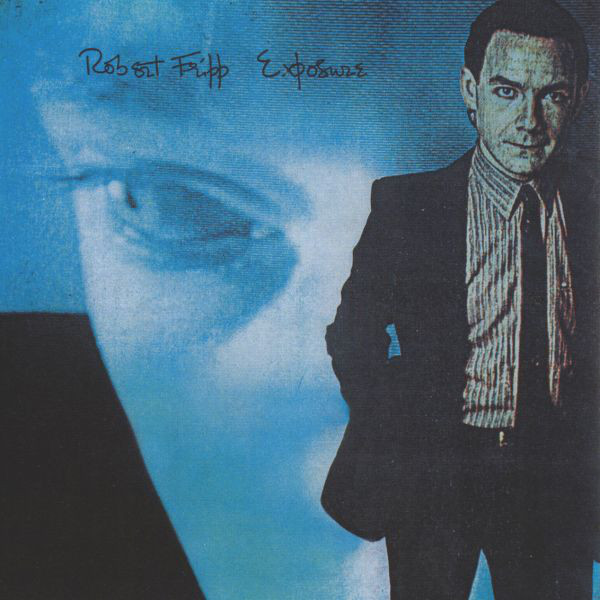
Four out of three music bloggers agree that you can’t go wrong listening to Daryl Hall, Peter Gabriel, Robert Fripp or David Bowie. I agree that all three four of these artists are worth some time on the turntable, and that is what I did today. I started with a purchase of Sacred Songs by Daryl Hall; I didn’t have it in the library. I spent the next 47 minutes getting acquainted with this album. Next up were Peter Gabriel and 42 minutes of reacquainting myself with an album that was in the library and had seen more than a few spins around the spindle. I had listened to Exposure by Fripp recently, so I passed it over and jumped to Heroes by Bowie, which did not materialize from the library, so I had to stream it. A stop in Record Collectors Paradise will hopefully remedy this situation.

Record Collectors Paradise

Sacred Songs was recorded at The Hit Factory in August 1977 and released in March 1980. https://en.wikipedia.org/wiki/Sacred_Songs. 

Exposure was recorded June 1977–January 1979 and released June 1979

https://en.wikipedia.org/wiki/Exposure_(Robert_Fripp_album)

Scratch was recorded November 1977 – February 1978 and released 2 June 1978

https://en.wikipedia.org/wiki/Peter_Gabriel_(1978_album)

See the thread running through all four of these albums? Yes, you are correct, they were all recorded in 1977. The release dates are scattered a bit more, and I will address that as we go along. Originally, Fripp envisioned a simultaneous trilogy of albums comprising Daryl Hall‘s Sacred Songs, Fripp’s solo album Exposure and Peter Gabriel’s second album aka Scratch, both of which Fripp contributed to and produced. I am adding a fourth album that I think deserves to be a part of this trilogy, David Bowie’s album Heroes recorded July–August 1977 and released on 14 October in 1977.

https://en.wikipedia.org/wiki/%22Heroes%22_(David_Bowie_album)

Let’s flesh this out then, shall we? We can start with Daryl Hall and his first solo album Sacred Songs. Hall and Fripp had dissolved their previous musical ventures, Hall & Oates and King Crimson, respectively. While he was writing songs for the album Hall recruited Fripp who was also working on a solo album. Fripp ended up producing Halls album as well as doing guitar work on it. Hall wrote all the songs on Sacred Songs except Urban Landscape. Urban Landscape was a solo written and performed by Fripp featuring a ‘Frippertronics‘ solo), and “NYCNY” for which Fripp wrote the music and Hall the lyrics. “NYNCY” also appeared on Fripp’s album Exposure as “I May Not Have Had Enough of Me, but I’ve Had Enough of You” albeit with different lyrics. 

There are a few other names that we should remember, Tony Levin playing bass on “You Burn Me Up I’m a Cigarette”,  Jerry Marotta handled the drums on “You Burn Me Up I’m a Cigarette.”and Brian Eno playing synthesizer on “North Star.”

Despite being recorded in August of 1977, the album was not released until March of 1980. The recording company that Daryl Hall worked with was RCA, and they didn’t think Sacred Songs was commercial enough and might turn off the fan base that he had developed through Hall & Oats, so they shelved it. Pissed off at RCA Hall and Fripp gave away tapes of the album to music journalists and disc jockeys who gave it some air time which spurred his fans to start a letter-writing blitz directed at RCA. The album was eventually released in 1980 and went to #58 on the Billboard Pop charts without a hit single.

Meanwhile, Fripp was working on Exposure, his debut solo album, which was recorded in June of 1977 and released in June of 1979. Once again, we see a gap between the recording date and the release date, and once again it was Halls record label that held it up. They wanted him to have equal credit as Fripp due to Hall doing almost all of the vocals and once again RCA feared it would damage his commercial appeal. In the end, Fripp reworked the album and only used Halls vocals on two tracks and used Peter Hammill and Terre Roche for vocals on the remainder of the tracks.

Fripp’s original vision of a trilogy did not work out as intended although all the albums were eventually released. From Exposure the track “Urban Landscape” also appears on the Hall album Sacred Songs, as does “NYCNY”, on Exposure as “I May Not Have Had Enough of Me But I’ve Had Enough of You”, with different lyrics written by Hall. The Gabriel record also features a version of “Exposure”. “Here Comes the Flood” had previously appeared with a prog-rock arrangement on Gabriel’s first album, but Gabriel disliked the production, and created a simpler rendition of the song for Exposure.

Remember those names I told you to take note of, Tony Levin and Brian Eno. Well, they are on Exposure at well, Levin is the master of the bass guitar and Eno contributed synthesizer on several of the tracks. Jerry Marotta does drums on a couple of tracks, and Phil Collins from the band Genesis plays the drums on two tracks. Peter Gabriel who left Genesis in August 1975 to pursue a solo career did vocals and piano on “Here Comes the Flood” as well as voice on “Preface.”

Speaking of Peter Gabriel, the third album in this list is Peter Gabriel’s second album, Scratch, produced by no other than Robert Fripp. Most online music outlets refer to the album as Peter Gabriel 2: Scratch. The name Scratch is a reference to the front album cover designed by Hipgnosis that appears to show Peter Gabriel making scratch marks. Other musicians that contributed to this album are Tony Levin on bass and Jerry Marotta on drums. Fripp played guitar and ‘Frippertronics‘ on the track “Exposure” which is co-written by Peter Gabriel and Fripp and appears on both the Exposure and Scratch albums.

I would venture to add a fourth album to the trilogy, an album that is, in fact, a part of another trilogy. “Heroes” is the 12th studio album by English singer-songwriter David Bowie, released on 14 October 1977 by RCA Records. It was the second instalment of his “Berlin Trilogy” recorded with collaborator Brian Eno and producer Tony Visconti, following Low (released earlier that year) and preceding Lodger (1979). Of the three albums, it was the only one wholly recorded in Berlin. “Heroes” continued the ambient experiments of its predecessor, albeit with more pop elements and passionate performances, and featured contributions from King Crimson guitarist Robert Fripp. Brian Eno contributed synthesisers, keyboards, guitar treatments. Tony Visconti was on percussion,[41] backing vocals, and was the producer.

So, in conclusion, Robert Fripp started with a grand vision of a trilogy of albums. That never really worked out, although we did get three good albums out of the deal. I added a fourth. What comes after a trilogy? Usually a disappointment, there are plenty of good trilogies, but very, very few good fourth parts… 😉

I stole that last sentence from Quora. I hope you enjoyed this musical exploration as much as I did. I listened to a lot of really good music, not just the four primary cuts but the rabbit trails such as the music of the Roche sisters. Take the time to explore and enjoy the music along the way. Happy listening and play safe.
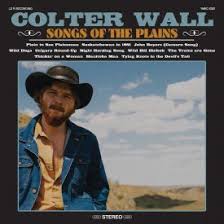
Colter Wall

I like country and western music. I like traditional C&W, most of all. I, therefore, like the music of a young man from Saskatchewan by the name of Colter Wall.

Colter Wall hails from Speedy Creek, Sask. and comes good stock, his father was the premier of Saskatchewan from 2007-2018. Colter started his musical journey listening to AC/DC, Black Sabbath and Led Zeppelin and learning to play their songs on guitar. A few years later Colter heard Bob Dylan singing “Don’t Think Twice, It’s All Right”, and that song sent him spinning off away from classic rock to classic folk music. He listened to the likes of Woody Guthrie, Dylan’s primary influencer, and Ramblin’ Jack Elliot, who was also heavily influenced by Woody Guthrie as well as Dylan himself thus coming full circle.

Colter was also really into the music of  Gram Parsons, Townes Van Zandt, George Jones, Waylon Jennings, Willie Nelson, and Hank Williams. Wow, that would be a mind-bending concert lineup. I also might add that I have featured most of these artists on my turntable recently, which should come as no surprise given my fondness for classic country music. Colter Wall has also been on my iTunes turntable, and I can’t get my hands on his vinyl for various reasons.

Colter sings songs of your typical fodder. Lost loves is a given of course, no matter what genre you sing in, and Colter adds the song, “Kate McCannon”, reminiscent of early folk and bluegrass.  He knows how to write a smart catch phrase. A good example is from the song “You Look To Yours” on his eponymous album:

“Two folks in our condition

We’ll never leave this bar room with our pride

So go about your earthly mission

Don’t trust no politicians

You look to yours and I will look to mine”

He gets a little jab in towards his Dad in the middle of a brilliant turn of phrase.

From the same album, Colter throws in a cover song, a tribute to one of his influencers, Townes Van Zandt. The song is “Fraulein” which is a vintage C&W song written by Lawton Williams and initially released in 1957 by Bobby Helms. “Fraulein” is a standard of the genre with cover versions from the likes of Stonewall Jackson, Hank Snow (I’m partial to this one), and Chuck Berry even took a swipe at it and created what I consider a waste of good vinyl.

Fast forward to 2018 and Colter Wall released his sophomore recording “Songs of the Plains”. After being on the road doing shows from the east to the west coast and many stops in between, Colter laments that he is homesick for the wheat fields of southern Saskatchewan.

The second track of this album has a song titled “Saskatchewan 1881”. Be it 1881 or 2018; the sentiment is the same, the “Toronto man” is looking to profit off of the sweat from the brow of the prairie men and women. The song also cautions us not to be “pickin’ fights with no Mennonites”, a sentiment that Corb Lund levelled at another prairie staple, the Hutterites. 

“Well it was truck after truck, we all got stuck

‘Cept the big old four by Hutterite truck

We all thought “Lord, are we in luck!”

But he wouldn’t come anywhere near us

Mighty neighbourly, mighty neighbourly”

The songs of Corb Lund and Colter Wall intersect many times which is no surprise what them being two prairie lads. Corb laments the passing of time on the song “We Used To Ride ’em”.

The wind still blows the dust across the exhibition grounds

The chute still creaks and moans and echoes saddle broncin’ sounds

The horses all wound up the same as the ones that came before

But we don’t ride ’em anymore”

I don’t ride ’em anymore either, and I shed a tear because  “The Trains Are Gone” and with them the castle spires of the prairies, the elevators that announced what town you were driving through in bright, bold letters on their sides.

“The trains are gone, the trains are gone

Spent like the coal they once rolled on

The rails don’t hum, the ‘bos don’t bunk

No brake-men yodelin’ those rail yard songs”

Railway tracks crisscrossed through my family with uncles that worked the rails for their whole lives and others like myself that only achieved a brief taste of that way of life.

The remainder of Colter Wall’s album “Songs of the Prairies” continues the theme of flat land livin’. Fast forward to 2020 and Colter Wall delivers another suburb album, “Western Swing & Waltzes and Other Punchy Songs”. That is one excellent album title and opens the album with an equally excellent song about just that.

This album also graces us with a couple of cover songs, “Big Iron” by the quintessential cowboy singer, Marty Robbins. Colter Wall doesn’t veer too far away from the original and Colter Wall delivers the lyrics smoothly with his baritone voice. He follows this gunfighter song with a tribute to two names that are eponymous with guns, Henry and Sam, a reference to the 16-shot repeating rifle designed by Benjamin Tyler Henry and Samuel Colt.

A tip of the hat to his mentor, Ramblin’ Jack Elliot, follows with the mysterious song “Diamond Joe”. Diamond Joe has quite an interesting back story, and you can read about it here: https://nativeground.com/diamond-joe/

Next up is “High and Mighty” a song that is about as country and nearly as cowboy as you can get, it is about a horse in the rodeo named High N Mighty, owned by the stock contractors Brown and West. High N Mighty was named Bucking Horse of the Year for Canada in 1974 and 1976. Leo Brown, the Brown in Brown and West lived in Czar, Alberta for a spell and I babysat in his home. I still marvel at his trophy room. He also let me use his snowmobile, which was lots of fun. That would have been in about 1971, in 1981 I was riding bare-back in the Northern Alberta Amateur Cowboys Rodeo Association. I did six rides and got bucked off six times. I knew when to quit, and now I just listen to cowboy records and go to the occasional rodeo as a spectator.

Getting back in the record groove after my rabbit trail we have “Talkin’ Prairie Blues”, not to be confused with “Talkin’ Veterinarian Blues”.

One of my favourite songs to play on guitar is “Ghost Riders In the Sky” written by Stan Jones, who also wrote the song “Cowpokes”, that Colter covers here. He then rounds out the roundup with two original songs, “Rocky Mountain Rangers”, which is a bit of Canadian history and “Houlihans at the Holiday Inn”. Throwing Houlihans has a couple of meanings. It could be a method of throwing a lasso, typically in a corral where space is limited. It could also be cowboy slang for raising a little hell, perhaps in the Holiday Inn while on tour.

So there we have an overview of Colter Walls music up to today. I would encourage you to listen to all three of his albums as well as chasing down all the rabbit trails.  Ian Tyson, Corb Lund, Ramblin’ Jack Elliot, Bob Dylan, Woody Guthrie, Stan Jones, Marty Robbins, Bobby Helms, Stonewall Jackson, Hank Snow, and yes, even Chuck Berry’s version of Fraulein.

All music is good music; there is just some that I like better than others.

I wish happy listening to everyone and play safe.

Emi Wes/Issues

In the press handout that came with this song and video, there is one fragment of a sentence that jumped at me as I reread it for the umpteenth time searching or a muse.

“Emi Wes has spent the last couple of years … experimenting with different genres to perfect her musical craft. She eventually found the core of her musical foundation; a sound that is completely hers. Entering a new collaboration with renowned producer Robin Hannibal, Emi is ready to kickstart her career with the release of her new single ‘Issues’.”

My ruminating was nothing more than highjacking the above quote, copying and pasting it into this review.

I do come away with my own opinion, of course, and I would be remiss not to inform you, the kindly reader of this review of what that assessment is.

It is haunting. It floats, it rises above the mundane. It moves me and makes me want to dance with it. This song leaves me yearning to hear more by Emi Wes.

She sings; ‘Sensitive as a flower, watch me bloom so eager to learn, I watch it grow.’ The song is a self-love affirmation, as she explains: “Over the years, these have been the lines of my life. It’s really about not being frightened of appearing vulnerable.”

Discussing the song, she tells us: “The instrumental, the strings and Robins chords just gave me the words to a feeling I had in me. I guess it was also important for me to address that I have issues too because we all do. Sometimes saying it loud makes it more okay. For me, it’s a sign of strength being able to say the less pretty out loud.”

The single of ‘Issues’ single is available to stream via No Rules No Limits. No word on an album yet.

You can listen to it here:

https://soundcloud.com/vufempire/issues-emi-wes-single/s-70mDr

https://www.youtube.com/watch?v=GCev1Z57LdQ

https://open.spotify.com/track/6Wh89p24HDNBXD8hC2cpkR?si=cO2jzxgrSn6afN3bA-lW5g

https://vuf-empire.dk/emi-wes/

https://www.instagram.com/youngemiwes/?hl=da

https://www.facebook.com/emiwesofficial

For press enquiries, please contact james@mysticsons.com or dan@mysticsons.com

Still Corners @ The Last Exit

Still Corners are taking The Last Exit, but it will not be my last listen to their ethereal haunting music. The Last Exit has taken me on a musical journey with their often hypnotic music. Still Corners travels between bright, sparkling acoustic guitar, the crooning of Tessa, the lead vocalist for Still Corners, and a steady rhythm that keeps the song moving forward. There is a definite feeling of motion in the music that shows up visually in the accompanying video of The Last Exit.

Tessa describes the idea behind the video -“In a world where everyone thinks all the corners of the map are filled in we like to suggest there’s something beyond that, something eternal in the landscape and in our psyche. Maybe you don’t see it every day, but it’s there, and that’s what we are trying to connect to.”

The Last Exit, the fifth studio album for Still corners, will be released on 22nd January 2021 on Wrecking Light Records.

https://www.stillcorners.com

https://www.facebook.com/stillcorners/

https://twitter.com/stillcorners?lang=en

https://www.instagram.com/stillcorners/?hl=en

open.spotify.com/4zKYrXs8iN4AeHmO8ZxNqp

For Press enquiries, please contact james@mysticsons.com

Misty Coast/In A Million Years

Once In A Million Years, the new single from Norway’s Misty Coast is energetic, listenable music. It is…I don’t think I can put this in a box for a specific genre. It moves about shift shaping as it goes, and touches on many styles and sounds. The vocals are smooth as well as edgy. The guitars are distorted but not in the heavy metal style that Norway is so famous for having. There are shining acoustic guitar notes and a bass that keeps chugging along. The drums have bright cymbal shots juxtaposed against the beat that holds all the instruments in sync.

Do I like the song? Bottom line, what kind of a review do I give it. I give it five stars, this is a lovely little song, and I hope I get to hear it in a full-length album soon, I don’t want to wait a million years.

https://mistycoast.no/

https://www.instagram.com/mistycoastmusic

https://www.facebook.com/mistycoast/

https://twitter.com/mistycoastmusic

Press enquiries, please contact jgreen@mysticsons.com

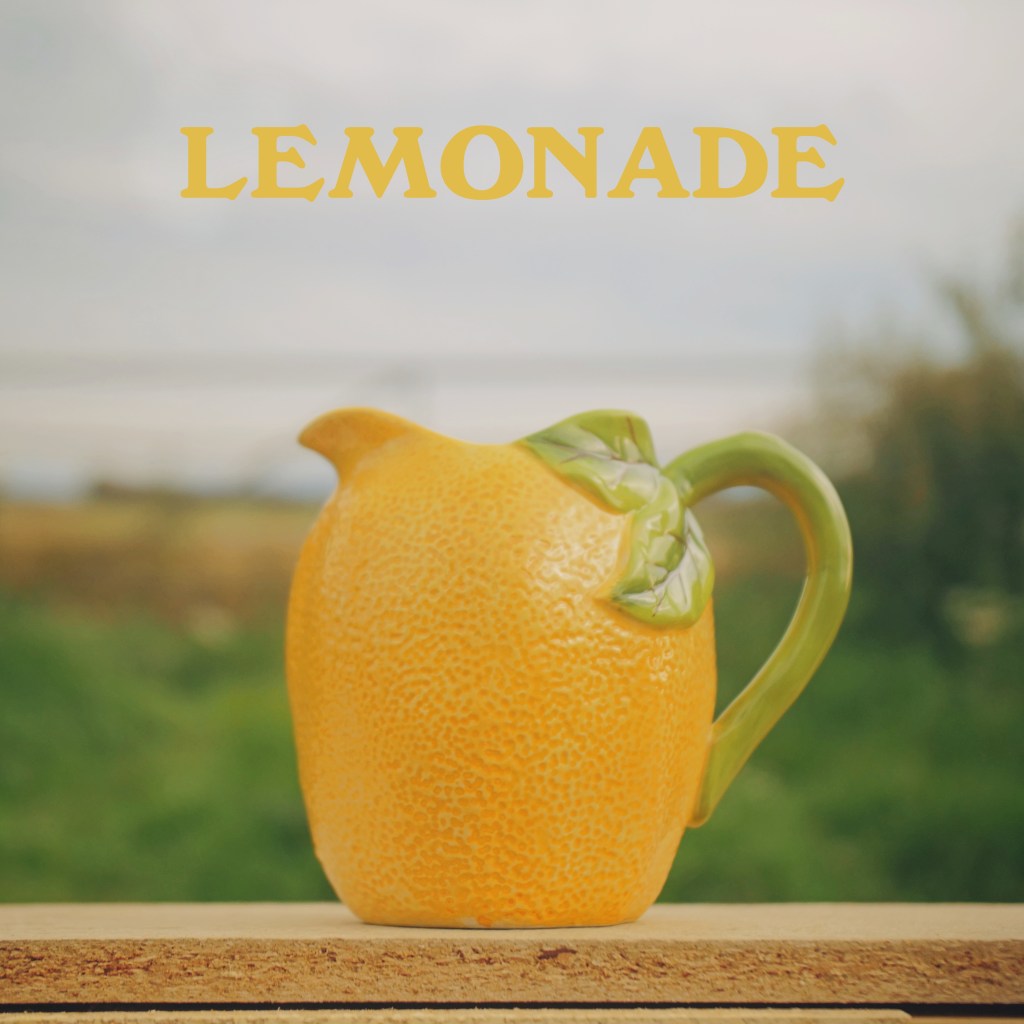
Sonny Winnebago & Lemonade

Lemonade?

No thanks, I’ll have a coffee, please.

No, no, no. Lemonade is a song that you should give a listen.

Oops!

Sonny Winnebago.

It’s a bit cloudy actually, and I prefer staying in hotels.

No, no, no. Sonny Winnebago is the stage name of Welsh-Australian pop troubadour Harvey Jones.

Harvey who?

Harvey Jones, remember that name because I think you will hear more from him.

I wish it were summer so we could drink Lemonade.

It is summer in Australia, and good music sounds good anywhere, anytime.

Where can I listen to this bloke’s tunes then?

You can listen to it on SoundCloud, here:

https://soundcloud.com/sonnywinnebago/lemonade

On Spotify here: https://open.spotify.com/album/0uEmdkMwhbmqSsUFoulGIT

And you can discover more about Sonny Winnebago here:

https://www.facebook.com/sonnywinnebago

and here: https://twitter.com/sonnywinnebago

and here: https://www.instagram.com/sonnywinnebago/

Harvey tells us: “Everyone’s got good memories of picking up a recorder or triangle in school, so we used lots of instruments. Davey brought along some shakers; there’s also a ukulele, woodblock, kazoos & a kalimba. My school instrument was the flute, so we put that in too.”

 “I was walking to my job as a barista one sunny day in North London and saw some little go-getters selling Lemonade outside their house. I thought that was really cool and reminded me of when I used to make Lemonade from a lemon tree we had in the back garden. Anyway, I had a charity shop acoustic that I kept upstairs at work & I wrote the song on my break that day. Some songs take weeks, months and even years to write, but Lemonade only took a few hours. I think that’s how you know it’s a good tune – just totally uninhibited, like the song was already in me somewhere, or in the air that day! In terms of its lyrics and meaning, there’s not really much to analyze, haha. There’s a nice Gremlins reference in the first verse which makes me happy. In terms of production, with the help of wonderful producer Charlie Francis, and awesome session musicians Davey Newington (Boy Azooga) and Matt Evans (KEYS), we achieved this cool ‘classroom’ sound. Everyone’s got good memories of picking up a recorder or triangle in school, so we put in loads of fun instruments. Davey brought along some shakers, so we used all of them. There’s also a ukulele, woodblock, kazoos & a kalimba that Charlie keeps on his desk for good measure! My school instrument was the flute, so we put that in too! If you listen closely, you can even hear a kitchen sink. Enjoy!

Lemonade is available to stream now, with Phwoar & Peace. 

For press enquires, please contact jgreen@mysticsons.com

Crawford Mack / Firing Squad

This is a great sone with a great video to round it out. I present for your viewing pleasure: Crawford Mack and his new single/video, Firing Squad.

Following on from the release of his gracious love ballad ‘Depends on Where You Stand’, we see a change in the singer, as he swaps orchestral melodies for downtempo acoustic stings in his second offering ‘Firing Squad’. Building a sharp momentum using melodious gentle guitar riffs and a rhythmic drumbeat, ‘Firing Squad’ explores the power of a guilt-ridden conscience that one might feel due to their own behaviour; specifically targeting the action of mistreating others. 

Accompanied by a short film conceptualised by the songwriter, the new music video directed by Liam Hendrix Heath, borrows heavily from space oddity era Bowie and Stanley Kubrick; following an astronaut’s journey through suburbia and his past in a jarring, mirroring the claustrophobia and hidden menace of the track. 

The lyrics draw on the use of power to oppress the powerless and were inspired by a reference in a William Mcllvanney book to the blindfold used in firing squads being to spare the shooters seeing the condemned eyes. The teacher in the film embodying a particular personal memory for Crawford.

Discussing the new music video, Crawford tells us: “I didn’t want to go for something obvious with a literal ‘Firing Squad’ and soldiers because I think I’ve seen plenty of that in music videos before. Liam and I spent a long time over lockdown talking through what the song was about for me, until one day out of the blue, he came up with the idea of the astronaut walking past tableaus that are flashbacks of his life. The idea grew from there until we started to create our antagonist teacher character for the final face-off.”

https://www.facebook.com/crawfordmackmusic/

https://open.spotify.com/artist/6CKMgHCNRQ5bQTV0Nx4LuM?si=6wobUzdNQBKqK6LcJhYqnQ

https://www.instagram.com/crawfordmack_/?hl=en

https://twitter.com/crawfordmack_?lang=en

https://soundcloud.com/user-671874636-571628367

Press enquiries, please contact james@mysticsons.com or leanne@mysticsons.com

Press enquiries please contact james@mysticsons.com or leanne@mysticsons.com

Raven/Whatever

“Whatever was written in a stream of consciousness, the words just poured out of me. When finished, the brutal honesty struck me. I created a mirror, forcing myself to look into my own eyes.” 

Quoth a Raven, Raven Artson. This Raven can quote more than ‘Nevermore’; in fact, this Raven is very quotable. Raven Artson is a Los Angeles based multidisciplined artist who actively directs his music videos and produces for artists including Sevdaliza, Pip Blom and Ray Fuego. More recently he started curating his interdisciplinary shows, which has led fashion designers like Hardeman and Hanger Inc. to collaborate with artist like himself, True Blue, Beskhen and Cosima.

With a new EP in the pipeline, Raven is ready to take the next step in his career: “As a person, I try to be as honest as possible in my relationships. It’s exciting to share music that’s just as genuine.” 

‘Whatever’ is available to stream via Rosed Out Records.

https://www.facebook.com/RavenArtson/

https://www.instagram.com/ravenartson/?hl=en

https://soundcloud.com/ravenartson

https://twitter.com/ravenartson

For press and radio enquiries, please contact james@mysticsons.com

Spunsugar/Belladonna

One song at a time I am building towards the release of Spunsugars album release highly-anticipated debut album ‘Drive-Through Chapel’, out on the October 2nd via Adrian Recordings.

Today I am enjoying their newest single release Belladonna. I won’t add much to this post, but I look forward to the album which I will give a few more words to than this single.

Listen and enjoy their singles thus far: Run, Happier Happyness and Belladonna.

https://www.facebook.com/pages/category/Musician-Band/Spunsugar-11954664354594177/

https://www.instagram.com/spunsugarmusic/

https://soundcloud.com/spunsugarmusic

https://spunsugar.bandcamp.com

https://open.spotify.com/artist/2NDWJvRwXGTFBngWiSNLu9?1si=J8i_Vw-HSUuXxE6m9_sP3w

For Press enquiries, please contact james@mysticsons.com or johnbenjamincalvert@hotmail.com