wassailer – someone who proposes a toast; someone who drinks to the health of success of someone or some venture
Wassailer – the pseudonym of the artist, Will. Formerly of the band Evergreen (previously known as We Were Evergreen), a French alternative indie-electro-pop trio. The band formed in Paris in 2008 but relocated to London, UK, in 2011 and that is were Will now lives and records.
Will honed his skills as a musician through the four EP’s and an LP that We Were Evergreen released, Will now based in Lewisham is finding his own identity influenced by South East London’s jazz and afro scene.
Weaving his style with songs that land somewhere between Irish trad and popular grime, Will tackles a plethora of social malaise and the lack of empathy behind humanity’s behaviour.
Will, as Wassailer, delivers a very forthcoming album. Commenting on it he explains “I’ve managed to tell the story I wanted to tell, the way I wanted to tell it, starting with the newest song I’d produced, and finishing with the eldest and most personal piece I ever wrote… It’s very intimate and very political. I could not have been more honest, clumsy, passionate, very me.”
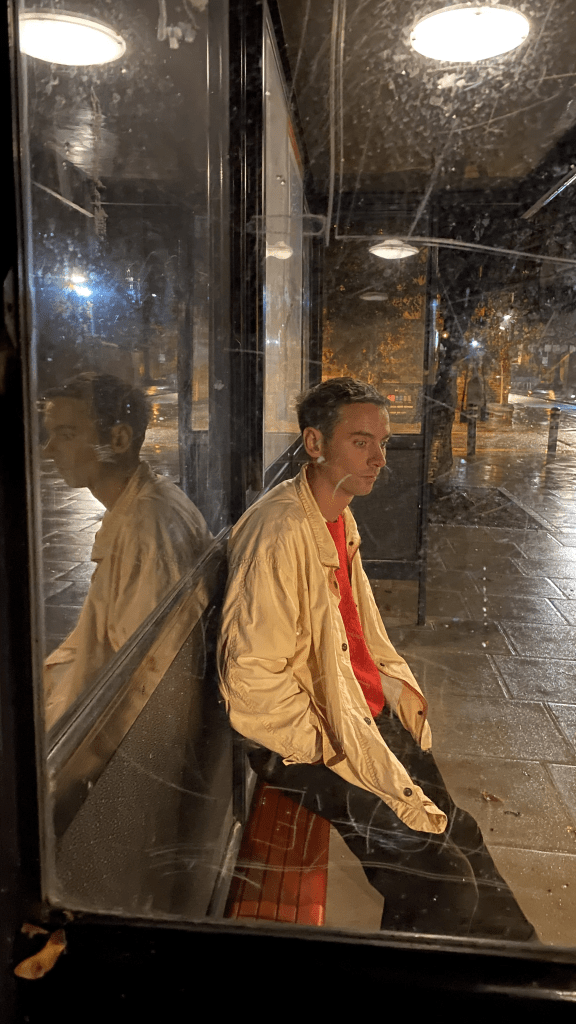
From the debut single ‘Son’ Wassailer returns to unveil the atmospheric single ‘242’. Accompanying the single “242” is a lyric video featuring Wassailer himself, sitting at the top of a 242 bus, the video overlays with distorted time-lapses of the journey. Commenting on the video, he says: “I went back to East London to shoot some time lapses with my phone, sticking it to the upper deck front window of the actual bus 242. I was obsessed with the raindrops trickling on it at night, creating these psychedelic colour fx with the traffic lights. That’s basically as blurry as what’s going on in my mind most of the time.”
Will is building suspense in anticipation of the release of his solo debut full-length LP, ‘i, the bastard’ which will be released via Empty Streets Records on January 27, 2021. You can get a sneak peek through the links to his singles, see below. I managed to get a preview, and I can honestly say that this is a killer album. January 27, 2021, mark on your calendar and listen to his single till then.
Six songs on the new EP from Tungz titled “Why Do Anything?”
I don’t know why we do anything, like “What For” man?
Six is the natural number following five and preceding seven. It is a composite number and the smallest perfect number. Just because it’s small is no reason to treat it like “Somebody To Get Shy With”.
Don’t be shy, “Go Out”, buy a six-string guitar and make music for your friends. Then after you are famous and selling tons of records, there is no reason to say “Can’t We Just Be Friends Again”?
We need to stay close, to “Touch” each other, to be “Emotional” but not cold and distant.
We don’t need to have six degrees of separation between us.
Our relationship can be full, as prosperous as the six whole notes in an octave. Let’s keep the distance between us small, as small as the six semitones in a tritone.
Let’s stop writing in abstract forms. The EP, “Why Do Anything” from the Bristol-based band Tungz is a smooth listen. Dabbling in electronica, R&B, and even touches of funk, make these tunes a pleasant listening experience. The variety of music kept me listening intently to find what came next as each song played out. ‘Why Do Anything?’ came out on the 30th of October via Heist or Hit. Do something, listen to this EP, you will not be disappointed.
Way back on Sept. 16, 2020, I posted a favourable review of the single “Breakfast Again” by Owen Meany’s Batting Stance. Today I have been listening to the album that that single came from, Feather Weights.
I searched high and low for a definitive definition of feather weight. For the single word “featherweight” it was easy to find, it is a boxing classification for contestants between 54 and 57 kg. and by analogy, it can be anything of little weight including an insignificant person or thing. A definition of “feather weight” was more challenging. It could be an individual that consumes a small amount of alcohol and is intoxicated, or it could be a scrupulously exact weight so that a feather would turn the scale.
For Daniel Walker, who is the alter-ego of Owen Meany, “The featherweights are the heavy burdens that we place on ourselves that are imagined, or that we can create by overthinking,” says Walker. “Trying to reconcile with gut instinct versus an anxious mind.”
That’s me in a nutshell, overthinking the deeper meaning between “featherweight” and “feather weight” and resolving nothing other than giving myself an anxious mind. Carry on then, shall we?
Daniel starts the album Featherweights with what should become a Canadian anthem right up there with Stompin’ Tom Connors “Hockey Song”. It also has one of the best song titles ever, “The Androgynous Hockey Stick”. Isn’t that an excellent handle for a song! As a youth, I was a featherweight hockey player, so my career only lasted to my 13th birthday when I found out that everyone else on the team outweighed me, outskated me and out checked me. I focused on writing after all the pen is mightier than the hockey stick.
Next up is He(art) Attack, which makes a nice bookend with “Pictures at an Exhibition” by Modest Mussorgsky.
Further along the meandering tracks of this album, we come to “Car Attack”, a new single for Owen Meany’s Batting Stance. This groove hugging ode to our fixation for automobiles, Daniel Walker tells us: “This is a song about how humans often will put more time into vehicle maintenance than upkeep in a relationship. The song dwells on a used car in a junkyard as it re-tells old adventures and hopes for the chance at a new one.”
We encounter several more exciting songs; you need to explore them; it is well worth the time spent. The album closes with “Breakfast Again” which Daniel Walker tells us “is about the emotions: the worries and resolution that come with no
longer sharing a life with someone important to you.”
This album is no featherweight or feather weight for that matter. It is a well thought out and crafted piece of art. The lyrics give you pause to wonder what Daniel Walker is writing about, for example, what’s up with “Empty Vespers”? In conclusion, I found this to be enjoyable to listen to, and I nominate it for my end of the year list. This album comes with the bonus of a rather enjoyable video: 1https://www.youtube.com/watch?v=MV3_ESlSbBI&ab_channel=OwenMeany%27sBattingStance
Our brains are marvellous repositories of life experiences, including music and every time we listen to a piece of music bits and pieces of it get stored in our long term memory. When I hear some new music, my brain wants to associate this new music with something concrete, a piece of music that I have listened to previously and stored in my medial prefrontal cortex. The more I listen to an album, the stronger the neural connection and the easier it is to retrieve that memory.
I have spent the last week listening to “Chewing Gum”, the soon to be released EP from Promise And The Monster, aka Billie Lindahl. My brain has been trying to make associations between this new music and bits and pieces of older music strewn throughout my prefrontal cortex. I feel that there are bits of Enya swooping and swirling about, listen for it on the song “Vykort från förr” and the title track “Chewing Gum”. Her use of bass lines that build the music up to create tension shows a connection to Orinoco Flow in my brain cells.
There are also healthy doses of Nick Cave and the Bad Seeds, most evident in the use of cello on the track “One Summer”. Listen for it on Nick Cave’s album and the title track ” And No More Shall We Part”.
AlbumArtExchange.com
Billie Lindahl learned the cello at school playing Swedish folk music. My remarkable brain neurons through some feat of molecular engineering that I do not understand made a connection between Swedish folk music and Australian alt-rock, go figure.
I keep thinking of Maryanne Faithful as I listened to this new music from Promise And The Monster. I don’t know where that comes from, but I can’t seem to shake it. Let me know if you can hear it, and where if you do.
I heard echoes of Enya, Nick Cave, and Maryanne Faithful, on the other hand, Billie Lindahl tells us that she took her inspiration from Nick Drake, Kaki King and Elliot Smith. I only know for sure that Billie Lindahl sounds a lot like Promise And The Monster and that is a good thing. I also know that after umpteen listens, Chewing Gum is permanently stuck in my brain.
After she debuted her EP Antaktis in 2007 at the age of 18, Billie Lindahl kept very busy over the ensuing years releasing her solo music, as well as under her alias Promise And The Monster. She also collaborated with like-minded musicians such as Alcest and This Gift is a Curse.
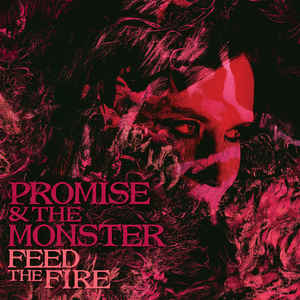
“Feed The Fire”; her third full-length album came out in 2016, produced by Love Martinsen. In 2020, Martinsen joined Billie to co-write her upcoming material. The new songs explore a less introspective side of her psyche, with an emphasis on the tongue-in-cheek nature lurking beneath a veneer of earnestness.
On the signing news, Billie tells us, “I’m so pleased, together we can take this in a great new direction. I used to like writing quite cryptic stuff, but I tried hard this time to get out of that safe haven and be more direct. The new songs often express the feeling of being that last person at the party, dancing slowly in the background, waiting for something to happen. Like a sad moonlight disco.”
While the label Icons Creating Evil Art added, “We are thrilled to welcome one of the most iconic voices in dark pop to our evil art family. Promise and the Monster has been working right beneath the surface and in the shadows creating the most beautiful world of her own. It’s time we invite you all to share it with us!”
I invite anyone reading this to listen to the EP “Chewing Gum” when it is released. The single “Closed My Eyes”, is available wherever fine listening is offered.
Lockers, an EP by the band White Jackets is my new favourite band that I know nothing about; they went to the top moving Jazz Sabbath from the #1 spot. A/ White Jackets are from Finland, that’s a good starting point, I have Finnish in my DNA. B/ They are a two-person band, that’s nice. I have listened to some excellent music played by two-person collaborations over the years, and these two guys do more with two guitars than some bands manage with four people. C/ They live in Vaajakoski, a small town in south-central Finland; there are more people in the community that I live in than all the people in Vaajakoski, Finland. D/ One of the people in this musical collaboration is Jussi Petäjä. From his Facebook page, I have found that Jussi is an incredibly gifted musician who has kept himself busy with numerous music projects. E/ I like their music. I have listened to this EP, Lockers, six times. End to end. The front end opens with Locker 65, a right smart instrumental that features some solid grunge guitar work over bright guitar accents, drums and assorted other noisemakers. We then listen to four well-crafted songs with lyrics that speak about the human condition, i.e. love found and love lost with lots of confusion between those two. The EP closes with Locker 57, a nice bright instrumental that is closer to shoe-gazer than grunge, and it leaves us with fond memories of the music behind it.
1969 I bought my first LP, Best of Bee Gees, easily identified by its bright yellow cover. I have to resist the urge to write it as Best of the Bee Gees; there is no ‘the’ in there. I played that album over, and over, and over. I knew every word to every song. I can clearly remember laying on the floor with my head in the middle of the two speakers on my parent’s record player. I don’t recall them ever complaining about listening to it so often, mind you Dad was away from home most of the time, Mom kept herself busy, and I didn’t turn the volume up to 11.
That was the only album that I bought that year, but I did purchase other albums from 1969 later on. Some of those albums that are still on my turntable include The Guess Who with Wheatfield Soul. Bob Dylan’s Nashville Skyline and Crosby, Stills and Nash, the story of that is below. The Rolling Stones compilation Through The Past, Darkly (Big Hits Vol. 2), Isaac Hayes phenomenal album Hot Buttered Soul, Abbey Road from the Beatles, and closing it with some more Guess Who, the crop is Canned Wheat this time. Some call 1969 the penultimate year of rock and roll. It closed the door on the 1960s with the Beatles dissolving as a band, the hippy era drawing to a shadow of its former self ( it never really went away), and rock and roll reinventing itself going into the 1970s. I may have only purchased one LP that year, but it was still an excellent year.
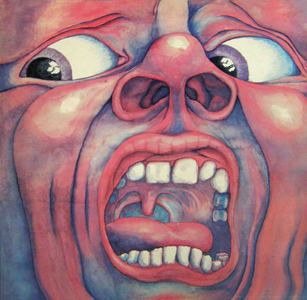
In 1970 I was travelling more, bin flipping in more record stores and with a bit more coin I was able to take home more music. I also was good at sticky finger shopping. A memorable addition to my music library from that year was a copy of Déjà Vu by Crosby, Stills, Nash & Young. I was introduced to this band by the clerk in a record store in Montreal. During layovers between flights, I would take a taxi to a nearby shopping mall that had a nice little record store, and the guy always had something good on the turntable that I would invariably take home. In 1969 he had Crosby, Stills & Nash on the turntable but I was short on cash so I just filed that away and in 1970 he had Déjà Vu up and playing, so that came home with me, Stills, Nash & Young would arrive later. Another special purchase that year was In the Court of the Crimson King by none other than King Crimson, although I heard it first in that same record store in 1969, like CSY, I had to wait a year to bring it home.
The list of albums released in 1970 is long, the list that I bought in 1970 is short, the two albums already mentioned and Woodstock: Music from the Original Soundtrack and More. I have a confession; I agreed to trade Woodstock to my friend Greg in exchange for the purple nazi helmet he had. I got the helmet, but he never got the album, and I have not seen him since then to make it right. If you ever read this, Greg, contact me, and I will ship the album to you. I do not have the helmet or the album as I write this. I also stole Suitable for Framing by Three Dog Night from the youth centre in Churchill Falls, Labrador. I don’t know who owned it, which makes restitution difficult. Some noteworthy albums from 1970 that I didn’t swipe and I am still spinning include Moondance by Van Morrison and The WhoLive at Leeds. Atom Heart Mother by Pink Floyd is notable for its excellent cover art and a long-standing relationship between The Pink Floyd and me.
1971, a new year and some new music, I was back in Alberta and access to new music was a bit difficult living in the little town of Czar. I managed to snag Aqualung by Jethro Tull, which triggered an interesting event. My Mom, who was super religious and my Dad, who was super narrow-minded about music, challenged me about Aqualung, so the three of us listened to it and talked about the lyrics. I don’t know why they did that. It was a weird experience. Another memorable piece of music that I acquired in 1971 was Imagineby John Lennon. It was my birthday present from Mom, she didn’t like this one either, but we didn’t sit and listen to it together. After Aqualung they let me put the stereo in my bedroom, so they didn’t have to hear it. 1971 makes for a long list of releases that I still listen to, including 4 Way Street by Crosby, Stills, Nash & Young, an album that I consider one of the best live recordings of all time. Sticky Fingers by The Rolling Stones, another example of great cover art with its iconic zipper. It Ain’t Easy by Long John Baldry, and I brag that I managed to see him live at a show in a bar in Red Deer. I had a signed copy of the album cover from that show but lost it along life’s highway. A few other albums worth mentioning are A Space in Time by Ten Years After which I loved to listen to on the quadraphonic sound system that I briefly owned. The music surrounded my head and was very trippy, nod, nod, wink, wink. Who’s Next and Meaty Beaty Big and Bouncy a pair of albums that year by The Who. Meddle by Pink Floyd and Pawn Hearts by Van der Graaf Generator kept my psychedelic groove going. Van der Graff Generator is an often overlooked band that I got into early in the 1970s and still enjoy listening to, especially the Pawn Hearts album.
I’ll close this brief disclosure on what I listened to as a young man. As a young boy, I heard my Dad play mostly Hank Williams, and we had a handful of country and western records that seldom got played. It was when I hit about 15 years old, 1969, that I got into serious listening. I’ll close out this era at 1973, the year that I graduated and transitioned from a schoolboy buying records with money from allowance and part-time jobs to a working man with a steady income. That steady income meant buying more records to play on the stereo that I bought so Mom and Dad could have theirs back. They had given it to me as a bribe to keep me in school till I graduated. It was a good investment. The Dark Side of the Moon by Pink Floyd, I’ll let Wikipedia explain it.
“The Dark Side of the Moon is among the most critically acclaimed records in history, often featuring on professional listings of the greatest albums. The record helped to propel Pink Floyd to international fame, bringing wealth and recognition to all four of its members. It has been certified 14× platinum in the United Kingdom and topped the US Billboard Top LPs & Tapes chart, where it has charted for 950 weeks in total. With estimated sales of over 45 million copies, it is Pink Floyd’s most commercially successful album and one of the best-selling albums worldwide. In 2013, it was selected for preservation in the National Recording Registry by the Library of Congress for being deemed “culturally, historically, or aesthetically significant”.”
I bought this as an LP in 1973. I added an 8 track copy and a cassette later that year. As of today, October 12, 2020, there are ten copies of it in our music library in all of those formats. I can remember driving around town with the windows down and the volume up listening to DSotM over and over. Little has changed. I am a bit chubbier and have fewer hair follicles, and what hair I do have it is a lot shorter. Other than that, I still enjoy hearing this album, and I occasionally can yet be seen driving with the windows down and the volume up on DSotM.
There is one other album that defined 1973 for me, that album is Bachman–Turner Overdrive. It doesn’t grace the turntable as often as some of the other era albums, but it still brings a smile to my face and good memories.
That closes out this definitive time of transition in my life. I travelled extensively, gathered plenty of good experiences and listened to a lot of good music. Many, many good albums didn’t make it to this blog. I didn’t want this to be a long and tedious list; it is a snapshot of me. Me from 1969 to 1973. Happy listening and play safe.
Four out of three music bloggers agree that you can’t go wrong listening to Daryl Hall, Peter Gabriel, Robert Fripp or David Bowie. I agree that all three four of these artists are worth some time on the turntable, and that is what I did today. I started with a purchase of Sacred Songs by Daryl Hall; I didn’t have it in the library. I spent the next 47 minutes getting acquainted with this album. Next up were Peter Gabriel and 42 minutes of reacquainting myself with an album that was in the library and had seen more than a few spins around the spindle. I had listened to Exposure by Fripp recently, so I passed it over and jumped to Heroes by Bowie, which did not materialize from the library, so I had to stream it. A stop in Record Collectors Paradise will hopefully remedy this situation.
See the thread running through all four of these albums? Yes, you are correct, they were all recorded in 1977. The release dates are scattered a bit more, and I will address that as we go along. Originally, Fripp envisioned a simultaneous trilogy of albums comprising Daryl Hall‘s Sacred Songs, Fripp’s solo album Exposure and Peter Gabriel’s second album aka Scratch, both of which Fripp contributed to and produced. I am adding a fourth album that I think deserves to be a part of this trilogy, David Bowie’s album Heroes recorded July–August 1977 and released on 14 October in 1977.
Let’s flesh this out then, shall we? We can start with Daryl Hall and his first solo album Sacred Songs. Hall and Fripp had dissolved their previous musical ventures, Hall & Oates and King Crimson, respectively. While he was writing songs for the album Hall recruited Fripp who was also working on a solo album. Fripp ended up producing Halls album as well as doing guitar work on it. Hall wrote all the songs on Sacred Songs except Urban Landscape. Urban Landscape was a solo written and performed by Fripp featuring a ‘Frippertronics‘ solo), and “NYCNY” for which Fripp wrote the music and Hall the lyrics. “NYNCY” also appeared on Fripp’s album Exposure as “I May Not Have Had Enough of Me, but I’ve Had Enough of You” albeit with different lyrics.
There are a few other names that we should remember, Tony Levin playing bass on “You Burn Me Up I’m a Cigarette”, Jerry Marotta handled the drums on “You Burn Me Up I’m a Cigarette.”and Brian Eno playing synthesizer on “North Star.”
Despite being recorded in August of 1977, the album was not released until March of 1980. The recording company that Daryl Hall worked with was RCA, and they didn’t think Sacred Songs was commercial enough and might turn off the fan base that he had developed through Hall & Oats, so they shelved it. Pissed off at RCA Hall and Fripp gave away tapes of the album to music journalists and disc jockeys who gave it some air time which spurred his fans to start a letter-writing blitz directed at RCA. The album was eventually released in 1980 and went to #58 on the Billboard Pop charts without a hit single.
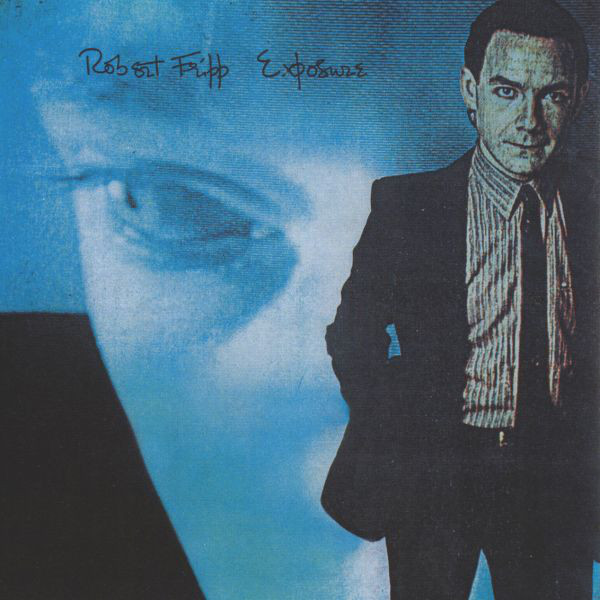
Meanwhile, Fripp was working on Exposure, his debut solo album, which was recorded in June of 1977 and released in June of 1979. Once again, we see a gap between the recording date and the release date, and once again it was Halls record label that held it up. They wanted him to have equal credit as Fripp due to Hall doing almost all of the vocals and once again RCA feared it would damage his commercial appeal. In the end, Fripp reworked the album and only used Halls vocals on two tracks and used Peter Hammill and Terre Roche for vocals on the remainder of the tracks.
Fripp’s original vision of a trilogy did not work out as intended although all the albums were eventually released. From Exposure the track “Urban Landscape” also appears on the Hall album Sacred Songs, as does “NYCNY”, on Exposure as “I May Not Have Had Enough of Me But I’ve Had Enough of You”, with different lyrics written by Hall. The Gabriel record also features a version of “Exposure”. “Here Comes the Flood” had previously appeared with a prog-rock arrangement on Gabriel’s first album, but Gabriel disliked the production, and created a simpler rendition of the song for Exposure.
Remember those names I told you to take note of, Tony Levin and Brian Eno. Well, they are on Exposure at well, Levin is the master of the bass guitar and Eno contributed synthesizer on several of the tracks. Jerry Marotta does drums on a couple of tracks, and Phil Collins from the band Genesis plays the drums on two tracks. Peter Gabriel who left Genesis in August 1975 to pursue a solo career did vocals and piano on “Here Comes the Flood” as well as voice on “Preface.”
Speaking of Peter Gabriel, the third album in this list is Peter Gabriel’s second album, Scratch, produced by no other than Robert Fripp. Most online music outlets refer to the album as Peter Gabriel 2: Scratch. The name Scratch is a reference to the front album cover designed by Hipgnosis that appears to show Peter Gabriel making scratch marks. Other musicians that contributed to this album are Tony Levin on bass and Jerry Marotta on drums. Fripp played guitar and ‘Frippertronics‘ on the track “Exposure” which is co-written by Peter Gabriel and Fripp and appears on both the Exposure and Scratch albums.
I would venture to add a fourth album to the trilogy, an album that is, in fact, a part of another trilogy. “Heroes” is the 12th studio album by English singer-songwriter David Bowie, released on 14 October 1977 by RCA Records. It was the second instalment of his “Berlin Trilogy” recorded with collaborator Brian Eno and producer Tony Visconti, following Low (released earlier that year) and preceding Lodger (1979). Of the three albums, it was the only one wholly recorded in Berlin. “Heroes” continued the ambient experiments of its predecessor, albeit with more pop elements and passionate performances, and featured contributions from King Crimson guitarist Robert Fripp. Brian Eno contributed synthesisers, keyboards, guitar treatments. Tony Visconti was on percussion,[41] backing vocals, and was the producer.
So, in conclusion, Robert Fripp started with a grand vision of a trilogy of albums. That never really worked out, although we did get three good albums out of the deal. I added a fourth. What comes after a trilogy? Usually a disappointment, there are plenty of good trilogies, but very, very few good fourth parts… 😉
I stole that last sentence from Quora. I hope you enjoyed this musical exploration as much as I did. I listened to a lot of really good music, not just the four primary cuts but the rabbit trails such as the music of the Roche sisters. Take the time to explore and enjoy the music along the way. Happy listening and play safe.
I like country and western music. I like traditional C&W, most of all. I, therefore, like the music of a young man from Saskatchewan by the name of Colter Wall.
Colter Wall hails from Speedy Creek, Sask. and comes good stock, his father was the premier of Saskatchewan from 2007-2018. Colter started his musical journey listening to AC/DC, Black Sabbath and Led Zeppelin and learning to play their songs on guitar. A few years later Colter heard Bob Dylan singing “Don’t Think Twice, It’s All Right”, and that song sent him spinning off away from classic rock to classic folk music. He listened to the likes of Woody Guthrie, Dylan’s primary influencer, and Ramblin’ Jack Elliot, who was also heavily influenced by Woody Guthrie as well as Dylan himself thus coming full circle.
Colter was also really into the music of Gram Parsons, Townes Van Zandt, George Jones, Waylon Jennings, Willie Nelson, and Hank Williams. Wow, that would be a mind-bending concert lineup. I also might add that I have featured most of these artists on my turntable recently, which should come as no surprise given my fondness for classic country music. Colter Wall has also been on my iTunes turntable, and I can’t get my hands on his vinyl for various reasons.
Colter sings songs of your typical fodder. Lost loves is a given of course, no matter what genre you sing in, and Colter adds the song, “Kate McCannon”, reminiscent of early folk and bluegrass. He knows how to write a smart catch phrase. A good example is from the song “You Look To Yours” on his eponymous album:
“Two folks in our condition
We’ll never leave this bar room with our pride
So go about your earthly mission
Don’t trust no politicians
You look to yours and I will look to mine”
He gets a little jab in towards his Dad in the middle of a brilliant turn of phrase.
From the same album, Colter throws in a cover song, a tribute to one of his influencers, Townes Van Zandt. The song is “Fraulein” which is a vintage C&W song written by Lawton Williams and initially released in 1957 by Bobby Helms. “Fraulein” is a standard of the genre with cover versions from the likes of Stonewall Jackson, Hank Snow (I’m partial to this one), and Chuck Berry even took a swipe at it and created what I consider a waste of good vinyl.
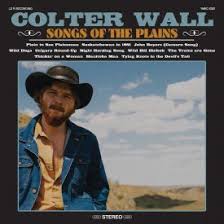
Fast forward to 2018 and Colter Wall released his sophomore recording “Songs of the Plains”. After being on the road doing shows from the east to the west coast and many stops in between, Colter laments that he is homesick for the wheat fields of southern Saskatchewan.
The second track of this album has a song titled “Saskatchewan 1881”. Be it 1881 or 2018; the sentiment is the same, the “Toronto man” is looking to profit off of the sweat from the brow of the prairie men and women. The song also cautions us not to be “pickin’ fights with no Mennonites”, a sentiment that Corb Lund levelled at another prairie staple, the Hutterites.
“Well it was truck after truck, we all got stuck
‘Cept the big old four by Hutterite truck
We all thought “Lord, are we in luck!”
But he wouldn’t come anywhere near us
Mighty neighbourly, mighty neighbourly”
The songs of Corb Lund and Colter Wall intersect many times which is no surprise what them being two prairie lads. Corb laments the passing of time on the song “We Used To Ride ’em”.
The wind still blows the dust across the exhibition grounds
The chute still creaks and moans and echoes saddle broncin’ sounds
The horses all wound up the same as the ones that came before
But we don’t ride ’em anymore”
I don’t ride ’em anymore either, and I shed a tear because “The Trains Are Gone” and with them the castle spires of the prairies, the elevators that announced what town you were driving through in bright, bold letters on their sides.
“The trains are gone, the trains are gone
Spent like the coal they once rolled on
The rails don’t hum, the ‘bos don’t bunk
No brake-men yodelin’ those rail yard songs”
Railway tracks crisscrossed through my family with uncles that worked the rails for their whole lives and others like myself that only achieved a brief taste of that way of life.
The remainder of Colter Wall’s album “Songs of the Prairies” continues the theme of flat land livin’. Fast forward to 2020 and Colter Wall delivers another suburb album, “Western Swing & Waltzes and Other Punchy Songs”. That is one excellent album title and opens the album with an equally excellent song about just that.
This album also graces us with a couple of cover songs, “Big Iron” by the quintessential cowboy singer, Marty Robbins. Colter Wall doesn’t veer too far away from the original and Colter Wall delivers the lyrics smoothly with his baritone voice. He follows this gunfighter song with a tribute to two names that are eponymous with guns, Henry and Sam, a reference to the 16-shot repeating rifle designed by Benjamin Tyler Henry and Samuel Colt.
A tip of the hat to his mentor, Ramblin’ Jack Elliot, follows with the mysterious song “Diamond Joe”. Diamond Joe has quite an interesting back story, and you can read about it here: https://nativeground.com/diamond-joe/
Next up is “High and Mighty” a song that is about as country and nearly as cowboy as you can get, it is about a horse in the rodeo named High N Mighty, owned by the stock contractors Brown and West. High N Mighty was named Bucking Horse of the Year for Canada in 1974 and 1976. Leo Brown, the Brown in Brown and West lived in Czar, Alberta for a spell and I babysat in his home. I still marvel at his trophy room. He also let me use his snowmobile, which was lots of fun. That would have been in about 1971, in 1981 I was riding bare-back in the Northern Alberta Amateur Cowboys Rodeo Association. I did six rides and got bucked off six times. I knew when to quit, and now I just listen to cowboy records and go to the occasional rodeo as a spectator.
Getting back in the record groove after my rabbit trail we have “Talkin’ Prairie Blues”, not to be confused with “Talkin’ Veterinarian Blues”.
One of my favourite songs to play on guitar is “Ghost Riders In the Sky” written by Stan Jones, who also wrote the song “Cowpokes”, that Colter covers here. He then rounds out the roundup with two original songs, “Rocky Mountain Rangers”, which is a bit of Canadian history and “Houlihans at the Holiday Inn”. Throwing Houlihans has a couple of meanings. It could be a method of throwing a lasso, typically in a corral where space is limited. It could also be cowboy slang for raising a little hell, perhaps in the Holiday Inn while on tour.
So there we have an overview of Colter Walls music up to today. I would encourage you to listen to all three of his albums as well as chasing down all the rabbit trails. Ian Tyson, Corb Lund, Ramblin’ Jack Elliot, Bob Dylan, Woody Guthrie, Stan Jones, Marty Robbins, Bobby Helms, Stonewall Jackson, Hank Snow, and yes, even Chuck Berry’s version of Fraulein.
All music is good music; there is just some that I like better than others.
Still Corners are taking The Last Exit, but it will not be my last listen to their ethereal haunting music. The Last Exit has taken me on a musical journey with their often hypnotic music. Still Corners travels between bright, sparkling acoustic guitar, the crooning of Tessa, the lead vocalist for Still Corners, and a steady rhythm that keeps the song moving forward. There is a definite feeling of motion in the music that shows up visually in the accompanying video of The Last Exit.
Tessa describes the idea behind the video -“In a world where everyone thinks all the corners of the map are filled in we like to suggest there’s something beyond that, something eternal in the landscape and in our psyche. Maybe you don’t see it every day, but it’s there, and that’s what we are trying to connect to.”
The Last Exit, the fifth studio album for Still corners, will be released on 22nd January 2021 on Wrecking Light Records.
This is a great sone with a great video to round it out. I present for your viewing pleasure: Crawford Mack and his new single/video, Firing Squad.
Following on from the release of his gracious love ballad ‘Depends on Where You Stand’, we see a change in the singer, as he swaps orchestral melodies for downtempo acoustic stings in his second offering ‘Firing Squad’. Building a sharp momentum using melodious gentle guitar riffs and a rhythmic drumbeat, ‘Firing Squad’ explores the power of a guilt-ridden conscience that one might feel due to their own behaviour; specifically targeting the action of mistreating others.
Accompanied by a short film conceptualised by the songwriter, the new music video directed by Liam Hendrix Heath, borrows heavily from space oddity era Bowie and Stanley Kubrick; following an astronaut’s journey through suburbia and his past in a jarring, mirroring the claustrophobia and hidden menace of the track.
The lyrics draw on the use of power to oppress the powerless and were inspired by a reference in a William Mcllvanney book to the blindfold used in firing squads being to spare the shooters seeing the condemned eyes. The teacher in the film embodying a particular personal memory for Crawford.
Discussing the new music video, Crawford tells us: “I didn’t want to go for something obvious with a literal ‘Firing Squad’ and soldiers because I think I’ve seen plenty of that in music videos before. Liam and I spent a long time over lockdown talking through what the song was about for me, until one day out of the blue, he came up with the idea of the astronaut walking past tableaus that are flashbacks of his life. The idea grew from there until we started to create our antagonist teacher character for the final face-off.”














 Weathered Music